Friday, November 09, 2007

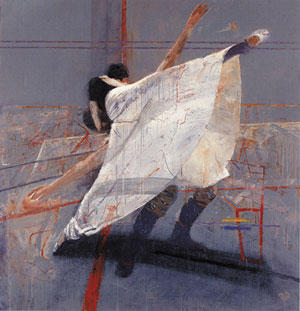
Jennifer Poon


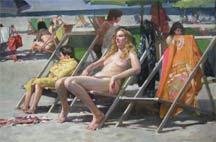
Here is some incerdible work by my amazing former student Jennifer Poon:

Lyendecker lecture


An interesting lecture podcast on JC Leyendecker. It makes good background listening...
http://www.hagginmuseum.org/exhibitions/leyendecker/lecture.html
He was one of the most influential and successful American illustrators of the twentieth century, sitting atop of the profession at a time when there were innumebrable great artists working in the field. His paintings are amazing combinations of draughtsmanship and bravura painting technique.

Wednesday, October 03, 2007

Irene Gallo Interview


Irene Gallo is the art director of Tor Books. She is certainly one of the biggest supporters of illustration in the publishing industry.
This interview originally appeared on Fantasybookspot.com

damon:
I was finally able to get in touch with Irene, as she has a very busy schedule. This interview was all prompted from meeting Irene at last year's New York Comic Con where I think I interrupted her lunch. Being the courteous person that I am, I figured I would let her finish lunch and track her down a bit later. That bit later took some stalking on my part and some annoying emails. I think Irene ended up finishing this interview just so I would not bother her anymore. All joking aside though I am very happy to introduce Irene Gallo, the Art director for Tor, Forge, and Starscape Books. I also want to thank Nicole Cardiff, one of my favorite young fantasy artists, who helped me with the questions for this interview.

Question: Let the readers know what you job consist of? What sort of work does being an art direction consist of?

Irene: It's my job to get all of Tor's book jackets created. I juggle the concerns of the Editorial department and the Sales & Marketing department to try and come up with a jacket that everyone likes. It's a lot of management work, but I'm always working with creative people and ideas. There is a lot of illustration used in science fiction and fantasy and by far the most enjoyable part of my job is working with the illustrators.

Question: Where did you go to art school?

Irene: Cooper Union. I was very lucky. Foolishly, it was the only school I applied to. I wanted to go there because it was considered and excellent art school, located in downtown Manhattan, and free. Once there I took a typography class on a whim and found that I really loved the problem solving of design.

Question: Do you find yourself not being able to enjoy art because it is your job?

Irene: Not at all. In fact, if anything I enjoy it even more. I have a much more intimate reaction to art knowing some of issues these guys struggle with. I think things are even more magical when I have a little insight into how they are made and knowing how difficult it is to make something seem effortless.

What _is_ unfortunate is that between Tor and volunteering at the Society of Illustrators I don’t have the time to read as much as I used to. I skim the first handful of manuscript pages and then something else is overdue and needs attention.

Question: Do you have to go out and find new talent or does it find you.

Irene: Both. I spend a whole lot of time looking for artists -- in bookstores, annuals (like Spectrum), online forums (like Conceptart.org), conventions, magazines, wherever I can. When I see a book cover, I want to know who did it -- whether I like it or not, I want to know who’s out there and what they are doing.

I also get lots and lots of mail. When I first started I would get portfolio drops a few times a week, nowadays printing has become so cheap that people send me tons of postcards and other mailers. Sometimes I get unsolicited email but that is fairly intrusive. It might lead me to their website, but only if I am really trying to avoid work.

I find a surprising amount of artists through recommendations by other artists. It’s a very supportive and giving community.

Question: What does a normal mail day for Irene look like when you are in the office?

Irene: Normal? You know I work at Tor, right?

Actually, it is all terribly normal...just with more interesting people than your average office. Lots of meetings, lots of figuring out deadlines and then complaining when they are not met, tons of email with artists. Begging editors for information. Begging artists to meet deadlines. Slinking away from Sales when I don’t have a cover ready.

Question: Do you read the book?

Irene: We publish hundreds of books each year so, unfortunately, I cannot read them. I rely on a series of conversations with the editors to get a sense of the book. Author blogs are a big help to get a feeling for someone’s work. Once I feel like I have a handle on the tone of the book I’ll pick a few artists and then talk to the editor and see if I’m heading in the right direction. Some artists like to read the books, and that’s a big help. Sometimes an editor will talk about the most pivotal scenes that may not be the most visual.

Question: How hard is it to match the author's vision of a character to the book? What about the people that say that's not what the character looked like? What would you say is the best cover matching story artwork?

visit Fantasybookspot.com to read the rest of this interview

Tuesday, September 11, 2007

Mark Ulriksen 9/12/07 @ CCA


Wednesday evening, 7pm
September 12, 2007
Timken Lecture Hall, SF Campus
Q&A and reception following
Illustration5 students : Be There. Attendance is MANDATORY unless you have another class on your schedule at the same time.

Wednesday, January 24, 2007

Hans Christian Andersen's Papercuts


"To Hans Christian Andersen paper was not meant to be media for the written word only. Paper - it seems - represented the basis for his imaginative expressing. Through out his life Hans Christian Andersen was an addict to paper. He wrote on it, he drew on it - and he used it to cut in. Like the ancient expression that he form and art was hidden in the stone, only to be revealed by the sculptor, the poet used his material - the paper - to engrave, or rather to carve out his ideas with ink. And more radically he used his unexpected monstrous scissors to cut out the most elegant figures.

In order to amuse his friends and their children Hans Christian Andersen made his paper cuts. Hans Christian Andersen was in fact a very popular paper cutter. In almost every memoir made by his acquaintances a recollection over this activity of the author is made. There is no straight connection between the authors paper cuts and his fairy tales, but he used to accompany his paper cutting with a fantastic tale, and end the tale by unfolding the paper to the amazed listeners.

The paper cuts were not only meant to be a pleasure for the eye but also a challenge to the mind. Often there was a hidden meaning in the paper cuttings - in the same way, as we know it from the fairy tales: on the surface it could amuse, in the depth it would amaze. Some of the paper cuts are purely picture puzzle or rebus others are icons combined to represent a linguistic symbol.

The double meaning hidden in the paper cuts demonstrates the way of thinking of the fairy tale author. It reveals an utmost modern way of thinking, using the word not as a media to create meaning but as a material of meaning itself."

Source: Odense City Museums
.

Monday, December 12, 2005

Wilson McLean


Wilson McLean is one of the most respected contemporary illustrators. His long career has been built on making sophisticated pictures executed with the highest level of craftsmanship.

Wednesday, November 16, 2005

William Edwards


William Edwards was one of the great paperback illustrators of the sixties and seventies.

Tuesday, October 25, 2005

Anders Zorn (1860-1920)

Anders Zorn, a great Swedish painter and a master of printmaking.


Friday, October 14, 2005

Burt Silverman


Daniel Adel mentioned that he had studied with the esteemed Burt Silverman. Mr Silverman has achieved the distinction of being both a hall-of-Fame illustrator and major force in figurative gallery art. He has also had a sizeable impact on many students over the years.

Sunday, October 02, 2005

Rolf Armstrong


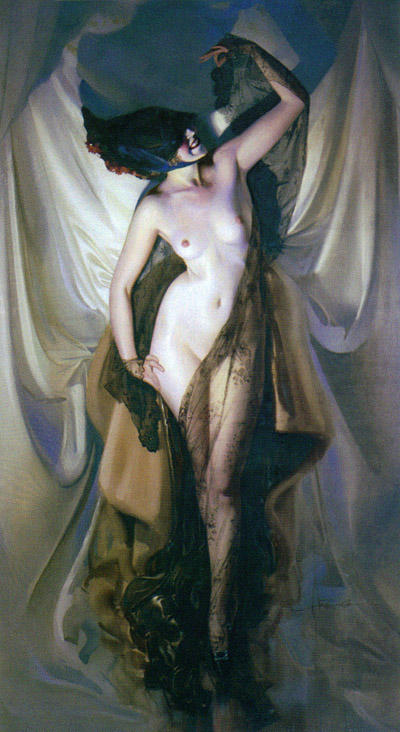
Rolf Armstrong painted actresses and idealized girls-next-door which made him one of the highest paid commercial artists in America. He was considered the 'Father of Pin-Ups' after his first calendar pin-up which he created in 1919.

Natalie Ascencios

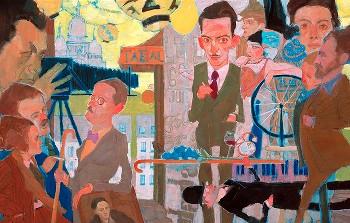
A graduate of New School University’s Eugene Lang College and Parsons School of Design, Ascencios has been a commercial illustrator since 1994. She has won many awards-for both illustration and puppetry.


Saturday, October 01, 2005

Kennis and Kennis


Two Dutch identical twins, who make very beautiful scientific illustrations, focusing on the recreation of prehistoric life.

from their website:
"Human evolution was what interested us. We made clay models of drawings or we copied drawings of fossils and skulls. We still do. We're identical twins and always sat opposite each other to draw, which means you've always got your main competitor breathing down your neck. But the advantage is that you keep each other on your toes. No one spots any stylistic difference in our work, because the mix of our two styles forms one complex whole. But we only create animals and humans that really existed and they have to be scientifically accurate."

Wednesday, September 21, 2005

Lane Smith


Contemporary master of the children's book...

Tuesday, September 20, 2005


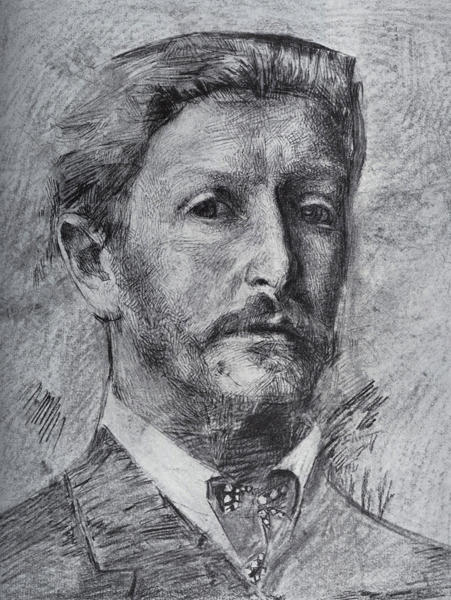
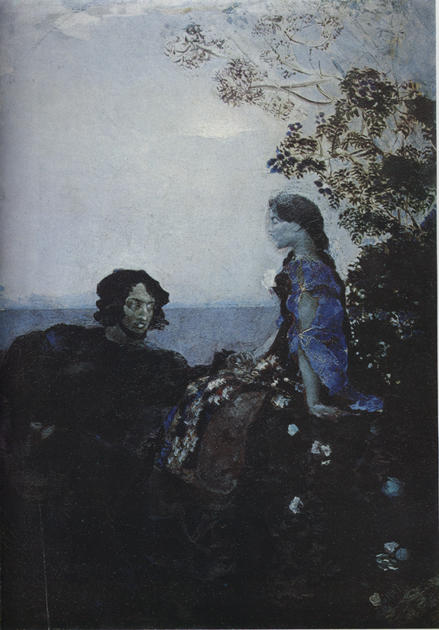
The art of Michael Alexandrovich Vrubel contributed to the establishment of the Symbolist movement in visual arts that flourished in Russia during the turn of the century. Though unappreciated in his own time, his art was given new life with the second generation of symbolists through association with the poetry of Block, Belyi, and Ivanov, the music of Scryabin and in Nijinsky’s choreography. Vrubel not only expressed himself in easel painting, but also in theater and costume design, decorative arts, sculpture, and book illustrations.

Sunday, September 18, 2005

Dean Cornwell

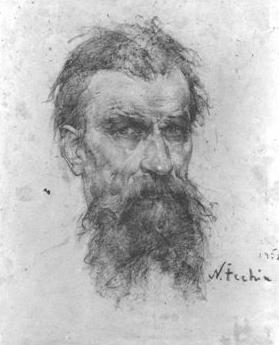
Nikolai Fechin 1881-1955


Nicolai Fechin was born in 1881 in Kazan, Russia. Already an important artist and teacher, Fechin emigrated to to America in 1923 under the patronage of american illustrators including Dean Cornwell. His work, and his drawings in particular, have been influential to generations of artists.

Tuesday, September 13, 2005

N8 Van Dyke


check out www.n8vandyke.com

Monday, September 12, 2005

Joseph Clement Coll


Joseph Clement Coll (1881-1921)-Probably the greatest master of pen and ink in the history of illustration, Coll defined adventure illustration at the turn of the century- without the use of models or photography, but working entirely from his imagination.

Florence Academy Pallette


Courtsey of Professor Andy Amerai, Florence Academy, Italy

Monday, September 05, 2005

Robert Heindel 1938-2005


“ What is critical in all art endeavours is that ability to overcome fear: fear of not being understood, fear of exposing too much of yourself, fear of being rejected”
-Robert Heindel